
Perimenopause Anxiety and Mood Changes: The Science Nobody Explained
Sep 25, 2026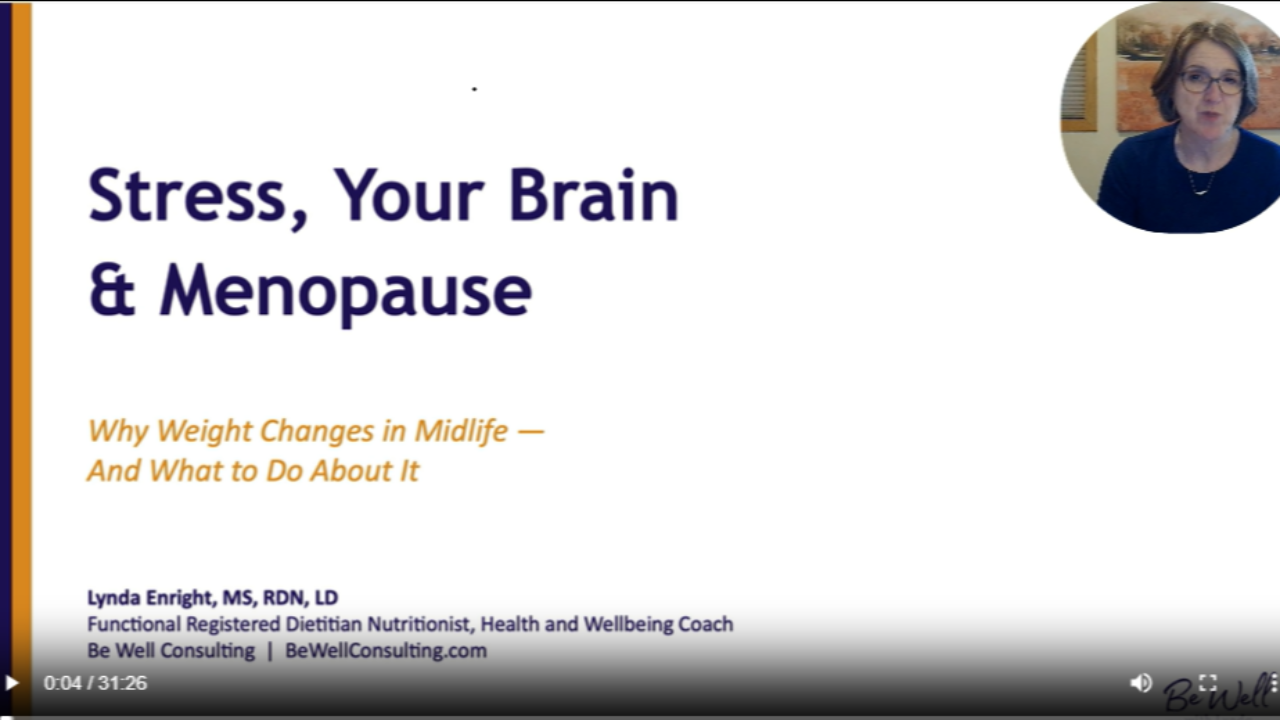
Why Your Brain Feels Different in Perimenopause
There's a moment many women describe to me almost word for word.
They're standing in the kitchen at 9pm. Nothing dramatic has happened. The day was ordinary. And yet they feel wired, raw, and inexplicably pulled toward the pantry for something they would have walked past without a thought five years ago.
Or it's 3am. They're awake, heart going, mind spinning about something that will seem small in the morning.
And the question underneath all of it is the same: What is happening to me?
Here's what I want you to know before you read another word. Something real is happening. It is physiological, it is well documented, and it is not a character flaw.
Menopause is a neurological event, not just a reproductive one
Most of us were taught that estrogen, progesterone, and testosterone are reproductive hormones. They manage cycles, fertility, pregnancy. When that chapter closes, they go quiet.
That's true, and it's a small fraction of the story.
These are whole-body hormones. They influence nearly every major system you have:
- Brain and mood - they help regulate serotonin, dopamine, and GABA, the brain's calming, reward, and pleasure chemicals
- Metabolism - insulin sensitivity, fat distribution, how your body uses energy
- Bones and muscle - both decline as hormones fall
- Cardiovascular health - estrogen supports arterial flexibility
- Sleep - they shape sleep architecture, which is why night sweats and insomnia arrive together
- Your stress response - and this is the one almost nobody hears about
That last one is the thread that connects everything else.
Estrogen is your brain's buffer on stress
Your body's main stress system is called the HPA axis - a three-way conversation between your brain, your endocrine glands, and the rest of you. It governs cortisol output, and through cortisol it touches mood, digestion, immune function, and energy.
Estrogen acts as a brake on that system. It dampens how much cortisol you release under stress.
When estrogen declines - and especially when it fluctuates unpredictably, which is the hallmark of perimenopause - that brake weakens. The alarm goes off more easily. It rings louder. And it takes longer to settle.
At the same time, three separate calming systems are quietly going offline:
- Serotonin drops, because estrogen supports its production and availability. Serotonin is your mood stability and emotional resilience.
- Dopamine dulls, because estrogen stimulates dopamine activity. Dopamine is motivation, focus, and reward.
- Allopregnanolone declines, because it's made from progesterone. Some researchers describe it as the brain's own built-in anti-anxiety compound.
Three buffering systems. Losing capacity at the same time. In the same brain.
This is why mood changes, anxiety, and emotional eating often show up during perimenopause in women who have never struggled with any of them before. Not psychological weakness. A predictable consequence of hormonal change.
Where your brain is actually living
In Emotional Brain Training, we describe five brain states - a simple scale from 1 (very low stress, thinking brain in charge) to 5 (very high stress, survival brain in charge). Everyone moves up and down this scale throughout a normal day. That's expected.
But research shows most women in perimenopause are spending far more time in brain states 3, 4, and 5 - the states where the limbic and reptilian brain are running the show and your wise, rational, planning neocortex is harder to reach.
Not because they're weaker or more emotional. Because the neurological buffer that used to hold the stress response in check is no longer there.
This matters enormously, because brain states 3 through 5 are exactly where stress eating stops feeling like a choice and starts feeling automatic. Where old emotional patterns resurface. Where the chips at 9pm aren't really about hunger at all.
Want the full picture? I walk through all of this - the brain states, the hormone pathways, and what to do about it - in my free video, Stress, Your Brain & Menopause. Watch it here.
The loop that keeps it going
Now add sleep.
A hot flash wakes you up. Night sweats wake you again. Every arousal keeps the HPA axis firing overnight. Morning arrives with cortisol already elevated, so you start the day at a 3 before you've had breakfast - and it tends to go down from there.
In a lower brain state, the pull toward external solutions grows: food, wine, scrolling, whatever takes the edge off. Then it's night again.
Hot flashes → poor sleep → elevated cortisol → lower brain state → stress eating → repeat.
Night after night. Week after week.
That's not a personal failing. It's a physiological loop.
And here's the part I most want you to hold onto: loops can be interrupted.
Your brain is not breaking
Imagine a woman waking twice a night for six months. Exhausted by noon. Less emotionally steady than she used to be. Add teenagers, aging parents, a career at its peak demand, a household to run, and the social calendar for an entire family - which is what midlife actually looks like for most of the women I work with.
Her baseline brain state has shifted. So circumstances that once felt manageable now feel overwhelming. Foods she once walked past now call to her.
Nothing is wrong with her. Her hormones changed, so her brain state changed - and that changes everything.
Understanding this isn't an excuse. It's an explanation. And an explanation is something you can actually work with.
In the next post, I'll show you exactly what happens to the eight chemicals that drive hunger, cravings, and fat storage when stress and hormone decline arrive at the same time. It's the clearest answer I know to the question why doesn't anything work anymore?
In the meantime, watch the full video - Stress, Your Brain & Menopause —- where I take you through the brain states, the physiology, and the first tools to start interrupting the cycle.
Stay connected!
Join our mailing list to receive the latest science on nutrition and be inspired to balance healthy eating in a busy life.
Don't worry, your information will not be shared.
We hate SPAM. We will never sell your information, for any reason.